For research into three professional art schools in Bangalore, exploring the distinct modes of communication adopted by teachers in the classroom, and critically assessing Karnataka’s arts education policy. Apart from facilitating arts-related workshops and seminar presentations, research findings are expected to lead to a book on art pedagogy.
For a compilation and ethnographical study of the distinctive folk songs of industrial workers on the plantations, mines and factories of eastern India. Anticipated outcomes of the study include a published anthology and audio recordings of the songs for archival use.
For research into the history of early photography in Bengal. The study will investigate the use of photography as a social tool by the Bengali urban, upper class to record their changing lifestyles in the latter part of the nineteenth century. It is expected to result in a book that traces this socio-cultural narrative through photographs.
For establishing a research cell at the School of Drama, Kala Academy, to field-test existing syllabi for theatre in schools in Goa. The School will also develop its own curriculum and short-term training programmes for theatre teachers, apart from a manual on theatre pedagogy.
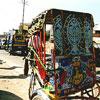
For the study and documentation of emerging religious art and architecture in Bangalore that have often provoked communal and ethnic conflicts. The study will explore the politics of public space and lead to a documentation of roadside icons that combine calendar art, modern architecture, historical styles and technological innovations.
For survey, documentation and technical assessment of the building crafts traditions of Ladakh, Zanskar and the Nubra valley. The project will result in a database and a comprehensive manual of guidelines for building systems in this region, which would help conserve traditional skills and knowledge systems.
For collaborative research, involving a centre of music research and training in Tamil Nadu and a school of performing arts in Kerala, towards the identification, documentation and notation of ragas and talas in Sopanam music, a near-extinct form of temple-singing. The research will result in selective video documentation of Sopanam artists.
For tracing, documenting and classifying the literary and visual history of Bengali print advertisements between 1800 and 1950. The compilation will be published and the collected material housed at the Hitesranjan Sanyal Memorial Collection, Calcutta.
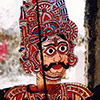
For making a documentary video film on the shadow puppet theatre of south India. The film will record the lives of shadow puppeteers, examine the performative and technical aspects of their art, and attempt to identify useful comparisons and intersections between shadow puppetry and cinema.
For sorting, classifying and cataloguing the personal papers of Satyajit Ray. Digital copies of this monumental archive of textual, graphic and audio material will be made available through a website as an interactive multi-media product. The project is also expected to generate an exhibition titled ‘The World of Satyajit Ray’.
For research towards an illustrated book on itinerant toymakers from various parts of the country. The study will document the lifestyles and craft of toymakers and identify possible measures to alleviate their lot. The research is expected to lead to published articles as well as lecture demonstrations and workshops on toy making.
For video and audio documentation of the oral and performative elements of sadir, locating it within the context of the Isai Vellalar community, whose few surviving members are the only exponents of this dance form.
For ethnographic video documentation of the temple oracles of Kerala. The resulting film will probe the collective dimension of ritual performance, critique its contemporary aesthetic functions and inquire into the possible neurological and scientific aspects of trance.
For research into Indian ceramic art practice in the nineteenth century. The study will focus on the implications of European trade for the Indian potter, the art school ethos and changing styles in Indian ceramic ware. It is expected to result in databases, a curatorial text and an illustrated book.
For developing and implementing, in collaboration with the Rewachand Bhojwani Academy, Pune, an arts programme that would lead to an arts education curriculum. Besides introducing students to local culture via the arts through a series of workshops, the programme seeks to make an impact on the staff and parents as well.