For the publication of a national theatre quarterly that gives priority to the voice of theatre practitioners, documenting their creative processes, theatre practices and oral histories.
For developing innovative syllabi and introducing new curricula and fresh pedagogical practices in cultural studies through certificate courses, workshops, conferences, consultations and lectures. The project will also generate a database that will contribute towards mapping the field of cultural studies.
For cataloguing and microfilming material on early Tamil cinema held at the Roja Muthiah Reference Library in Chennai. The gaps in this collection will be filled by acquiring or microfilming privately-held print material on Tamil cinema, and a database of the enhanced collection will be made available in English and Tamil.
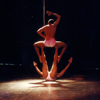
For the second stage of collaboration among a visual artist, a dancer/choreographer and a photographer/visual artist, leading to two installation/performances in Bangalore—around an open well, and in an art gallery. A travelling exhibition, a book and a commentary on the collaborative process are expected to emerge from the project.
For photographic documentation of the folk theatre form Tamasha in rural and small-town Maharashtra. The project will generate a ‘cultural biography’ of Tamasha and a visual record of its entire repertoire, as well as a series of photographic exhibitions in Maharashtra.
For a tour by contemporary dancers through the southern states of India, extending the reach of a highway performance circuit called Chaali that was conceived and put in place on the basis of an IFA-supported feasibility study. The tour will strengthen advocacy for Chaali and initiate processes to establish an institutional base for it.
For documenting the traditional designs of the cotton handloom weaving industry of Andhra Pradesh. The project will also foster initiatives to produce new designs and create quality textiles in a few production centres in Andhra Pradesh.
For research into the Dalit painting of the Mithila region of north Bihar. The ensuing monograph will broaden the scope of what is commonly understood as Madhubani or Mithila painting, which has upper caste connotations, by drawing attention to Dalit painting. An exhibition of Mithila paintings is a likely outcome of this project.
For a study and documentation of the heritage buildings in Kolkata’s Dalhousie Square. An inventory, drawings and photographs of the buildings and interpretations of available historical data will result in a report to the UNESCO for the nomination of the area as a World Heritage Site.
For research into the life and art of folk musician Mahender Misir and his peers and predecessors. Through them the project will explore the cultural history of the Bhojpuri-speaking region of Bihar and eastern Uttar Pradesh during the last century, and will result in books as well as a musical play on the life of Mahender Misir.
For research into the social history of the north Indian folk theatre Nautanki, with a special focus on the role of women. The study will result in a biography of the legendary Nautanki performer Gulab Bai, to be published in Hindi and English.
For research towards a documentary film titled In Search of Umrao, envisaged as a journey through history, memory, physical spaces and forms of cultural expression in pursuit of the tawaif or courtesan of north India.
For documenting the early recording industry and music culture in India. The study will identify the human, intellectual and material artefacts of early music culture and result in a series of essays on the gramophone as well as online sharing of documentation.
For field research into the oral ballads of the Mithila region of north Bihar. The research will result in a databank that would assist researchers by providing information on the content of the ballads and the social context in which they are performed.
For research towards a chronicle on the history of jazz in Goa, Bombay and Calcutta between 1930 and 1980. The study will trace the roots of this unique tradition through the lives of its best-known exponents and lead to a manuscript that blends true accounts with fictionalised narratives.